Friday, February 25, 2011

Blog Post #5, How Do They Compare?

I decided to compare a few export and import maps from Worldmapper including toys, clothing, and wood & paper. I included a "regular" map here at the top for easier comparison.

"Regular" Map


Toys Exports

Toy Imports

 The first comparison I made was the import and export of toys. It's so easy to see that a very large number of toys are exported from China, while the vast majority are imported in the United States. This relates to globalization since it has to do with trade between different countries. It was interesting to see this comparison because it really shows how much China exports, and that's just in toys! Growing up, I started noticing that many toys were made in China so the export map was not a big surprise to me. What was surprising, was that the United States seemed like the only large importer. I expected other countries to have a larger import than they did, which may be something good to note. Does this show that the United States is caught up in material things like toys more than other countries??


Clothing Exports

Clothing Imports

This map shows the import and export comparison for clothing. This map does a good job showing how companies can outsource their businesses to places where it is cheaper to make their products. For example, many companies in the United States are outsourcing to places like China and India. This is very evident on the export map. China and India are among the most noticeable exporting countries for clothing. On the import map, we can see that China and India are practically non-existent, while the United States and most of Europe are large importers.


Wood and Paper Exports

Wood and Paper Imports

Finally, I looked at the export and import of wood and paper. I wasn't sure what to expect when I looked at these two maps. I figured that the United States would be a big importer, but I didn't know what to expect anywhere else. I was surprised to see that Japan had such a large import. In terms of exporting, I was surprised by how much is exported by South America, Europe, and Canada.


After looking at just a few maps and comparing the imports and exports, we can see how global trade impacts almost everyone.


Thursday, February 10, 2011

Blog Post #4

Taj Mahal

Taj Mahal

In the movie, Slum dog Millionaire, we see the boys end up at the Taj Mahal. I decided to do some research on this historical site.

The Taj Mahal was built by Muslim emperor Shah Jahan in memory of his dear wife Mumtaz Mahal in Agra, India. Many sources say that Shah Jahan and Mumtaz Mahal were very close, which is why Shah decided to build the monument. Mumtaz is said to have died during child birth of their 14th child.
The city of Agra can be found southeast from New Delhi and lies along the Yamuna River.


The building of the Taj Mahal was started in 1631, soon after Mumtaz Mahal's death, and completed somewhere between 1648 and 1653, taking 17-22 years to be built. Over 22,00 men worked on the building, using over 1,000 elephants to transport materials. Several buildings, including the main gateway, a mosque, rest house, tomb, and a guest house, as well as a garden surround the Taj Mahal.

View of the Taj Mahal and area around it from Google Maps.
(Sorry if it's blurry, I copied and cropped it myself!)


Many visitors come to the Taj Mahal whenever it is open to learn the story of why it was built and who it was built for. Some have even come to call it "the epitome of love."

Mumtaz Mahal
Mumtaz Mahal
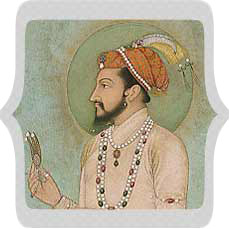
Shah Jahan
Shah Jahan


Thursday, February 3, 2011

Blog Post #3

Destination: Laos, Luang Prabang


I chose this National Geographic video because of its array of information about Luang Prabang, which is located in Laos. The video calls Laos a "real hidden gem of a destination." This caught my attention right away, wondering what might make this place so special. The video goes on to visit Luang Prabang, a city in Laos. I was surprised to hear how much detail the video gave concerning the geography of the city. It mentions the many Buddhist that live there and the daily rituals of the monks, giving the viewer an idea of the religion in the city. It mentions that the dry and cool season is between November and February, giving viewers an idea of the climate calender. Also mentioned, you could expect to see many "ornate temples" while visiting Luang Prabang. The narrator recommends the best clothing for a trip there, including shoes that are easy to remove, and conservative clothing. By mentioning these things, we are given insight into the culture and traditions of those living in Luang Prabang. I thought that this video was a good indicator of the geography   of the city, Luang Prabang in Laos.

Sunday, January 30, 2011

Blog Post #2

Immigration and Australia
Immigration Article Link
          This article discusses how Julia Gillard wants to supply more skilled migrants for a reconstruction program in Queensland. She says that there is no risk of taking jobs from Australians, but that it would help meet a current demand for labor. She says that they could, in fact, be doing even better if they had the workers. The blame, according to the article, goes toward politics who "connived to avoid a rational debate over immigration during the election." Gillard goes on to say that many people blame migrants at every chance saying the cities are too crowed and things of the sort.  Peter McDonald, a demographer, notes that "they [migrants] create demand for goods and services themselves, [and] their presence increased overall output."

          This article reminded me of the how the textbook said that "25 percent of Australia's people are now immigrants, reflecting the country's global popularity as a migration destination." It makes sense then, that some people blame immigrants for their problems of crowding. Australians may have fear of losing their jobs to immigrants simply because there are so many there already. If things continue, Australians may have to search harder for jobs. Another factor that ties into this is the White Australia Policy which lasted until 1973. The policy limited nonwhite migrations and promoted European and North American immigration. Although it is no longer in effect, I can see it influencing some Australian's views on immigration.
         On the other hand, there is a need for workers now that is not being filled. Migrants taking jobs in Australia may actually help expand the economy. An example is Asian immigration. As mentioned in the textbook, Asian immigration, which leads to possible economic links to Asian markets has been giving Australia a positive look  on the future. Many resorts are owned by Japanese firms that help provide bilingual experiences for Asian clientele. Because Australia has so much tourism, this is a very positive boost for Australia.
         Diversity Amid Globalization, p.646 and p.657


Australia Day
     Fun and Protests Mark Australia Day
          This article talks about the many fun activities that happened in Australia to celebrate Australia Day on January 26th, along with some not-so-positive events as well. There were cockroach races, citizenship ceremonies, fireworks, concerts, BBQ's, ship races, swimming races, parades, and.... protests. Australia Day is a day to remember the arrival of the First Fleet in 1788. Some view this as invasion day instead, debating whether it is appropriate or not to celebrate the arrival of Europeans.

         Even after reading the textbook it was odd to imagine that people thought of this big day of celebration as a day of invasion, but it makes sense in a few different ways. The British needed a place where convicts could be exiled and decided that Australia was a good site. So, in 1788,  the First Fleet arrived with 750 prisoners in Botany bay (modern day Sydney). More and more people kept coming and settling the land. Here are some reasons why this might upset people: First off, those who are Aboriginal or support the Aborigines might not find fun in the day remembering the first settlers and the conflicts they caused immediately after arriving. Second, Australia currently has a high percentage of immigrants there now which could cause tension in people today. As mentioned in the Immigration section above, about 25 percent of Australia's population today is made up of immigrants. It's hard to imagine why some people wouldn't want to celebrate a day like Australia Day, but after looking at it from another's view, it makes a lot more sense.
         Diversity Amid Globalization, p. 640 and 646
          

Australia Day Celebrations


Tuesday, January 18, 2011

A Colorful, 'Globalized' World; Blog Topic #1


Globalization is a combination of international trade, information technology, and interaction among people, companies, and governments. It effects everything including the environment, political systems, culture, and humans all around the world.

To me, this photo represents globalization in a few different ways.

First of all, having the different areas of the world all represented by code reminds us that technology is a huge tool used all over the world. It connects people and places every minute of every day. Where would we be without it? Technology gives us the capability to talk and even see people on the other side of the world. There are teams of people collaborating ideas through virtual work groups today instead of having to leave their home to travel. It's really an amazing thing!

Second, the colors are all throughout the image. This make me think of how products can be made in one area of the world yet found in many others. It amazes me to see the amount of items from across the globe wherever I go. World trade is a non-stop part of life on earth. Somewhere on Earth, someone is trading with someone else in another land! Another image that came to mind with the sporadic colors, is the idea of migration. People move to different countries for things like work and/or a better life, just to name a few.

This photo reminded me of globalization and helped remind me how much it has changed our world today.